
Akshay Tritiya could be a good reason to invest. Purchase jewellery only for immediate consumption.

Since the Union Budget, gold has become costlier by 8-9 per cent because of a 2.5 per cent increase in import duty to 12.5 per cent and about a 5 per cent depreciation in the rupee.

The Securities and Exchange Board of India's (Sebi's) board on Wednesday allowed foreign portfolio investors (FPIs) to trade in exchange-traded commodity derivatives. The move, it said, "will enhance liquidity and market depth, as well as promote efficient price discovery." Overseas investors will only be allowed to deal in non-agricultural commodity derivatives and only cash-settled contracts.

Gold prices are likely to decline further to around Rs 24,500 per 10 grams by December if the rupee continues to rule at the current level.
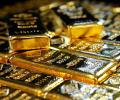
Despite price correction, policies that support the yellow metal will remain in place in the foreseeable future.

Gold, which was hovering around $1,321 an ounce in January 2019, has already breached $1,600 per ounce in the past few sessions to a seven-year high.

According to the Sebi circular, commodities that require price control measures will be less conducive for the derivatives market.

While global uncertainty has led to a rise in prices in 2016, there is still a lot of doubt regarding its future.
Such an economic environment tends to be positive for gold, the ultimate safe-haven asset. Since gold cannot be debased by central banks, it naturally gains in value.
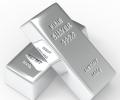
Treat silver as part of the procyclical or growth assets in your portfolio, advises Sanjay Kumar Singh.
Despite returns from gold down over 5% in the past three months, it is a good idea to keep this asset class in your portfolio.
A substantial fluctuation is likely because for a long period gold has moved in a narrow range of $ 50-60 and at higher levels short positions were built.
